Dust Storm Aftermath: Protecting Your AC and Tank
After a strong shamal storm, dust gets into places you wouldn't expect. Your guide to protecting your AC and tank after the storm.
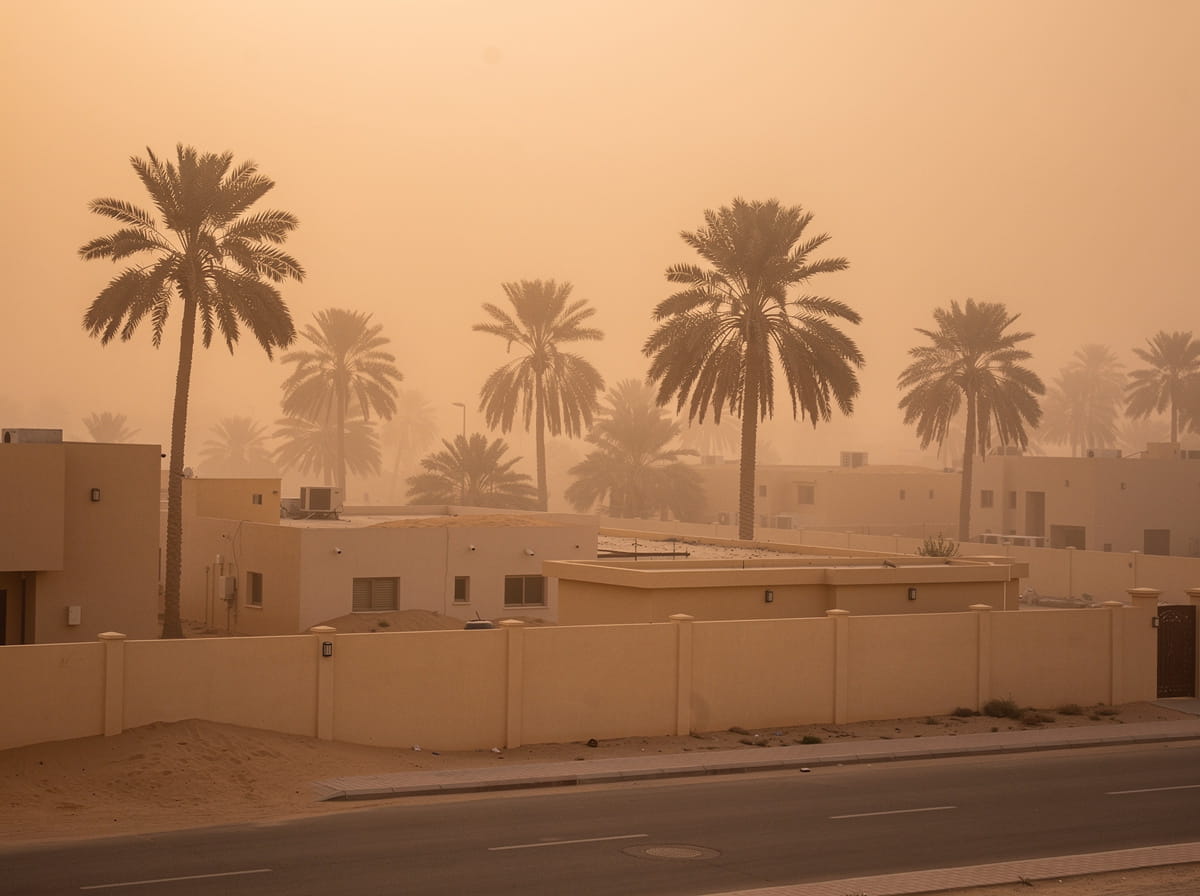
What Happens to Your AC and Tank After a Dust Storm?
After every dust storm that hits Dammam, Khobar and Dhahran, the AC condenser can pick up a layer that weakens cooling, and dust can slip into a poorly sealed tank. Step one is hosing the outdoor unit within 24 hours, then checking the tank within a week.
In summer the shamal, a hot and dry north-westerly wind, often stirs up sand and dust across the Arabian Peninsula, including Dammam, Khobar and Dhahran. Its strongest storms carry fine dust that can work its way indoors through small gaps.
Does Your AC Need Cleaning After a Dust Storm?
Usually a hose-down of the outdoor unit and a filter clean are enough after a storm. If cooling stays weak or the dusty smell lingers, the unit needs a deep wash, from 130 per split unit.
The outdoor unit (condenser) can quickly pick up a thick layer of dust. This layer blocks airflow and raises condenser temperature. According to the US Environmental Protection Agency's ENERGY STAR programme, dirty coils reduce an AC's ability to cool your home and make it run longer, increasing energy costs and shortening the equipment's life.
Does Dust Get Into Your Water Tank During a Storm?
On older or poorly sealed tanks, fine dust can work its way through gaps around the lid during a major storm. Modern well-sealed tanks keep most of it out. According to the World Health Organization, contaminants could enter a tank if its inspection hatch lid is damaged or does not fit tightly when closed. If you notice a slight yellow tint in tap water after a storm, have the tank and its lid checked. According to guidance from the World Health Organization, the source of colour in drinking water should be investigated, particularly if it has changed substantially.
What to Do After a Storm
Two steps only: within 24 hours hose the AC outdoor unit and check its filters, and within a week inspect the tank and the clarity of your tap water, booking a professional wash if you see any sign.
Immediately (Within 24 Hours)
- Hose down the AC outdoor unit if possible
- Check AC filters and clean if you see heavy dust
Within a Week
- Visual inspection of the tank through the inspection opening
- Let the kitchen tap run for a minute to verify water clarity
- Schedule professional cleaning if you notice any signs
Prevention Beats Treatment
Don't anchor your cleaning schedule to dust storms. The Eastern Province climate calls for AC cleaning before and after summer (heat is the biggest driver: months of non-stop runtime), and tank cleaning twice a year (heat keeps tank water warm for months). According to the World Health Organization, high water temperature enhances the growth of microorganisms. Storm-driven inspections supplement this rhythm; they don't replace it. A well-sealed tank lid also helps keep storm-borne dust out between cleanings.
Recent storm? Get a preventive check on your AC and tank: AC cleaning or tank cleaning at transparent prices.
Sources
- Maintenance Checklist, ENERGY STAR, US Environmental Protection Agency.
- Sanitary inspection form: piped distribution, storage tank, World Health Organization.
- Guidelines for Drinking-water Quality, 4th edition, chapter 10, World Health Organization.