Water Tank Types Compared: Which Is Best for Your Home?
Plastic, fibreglass, concrete, or steel? An honest comparison of water tank types: lifespan, rust, algae, and the best for Eastern Province homes. No tank is self-cleaning.
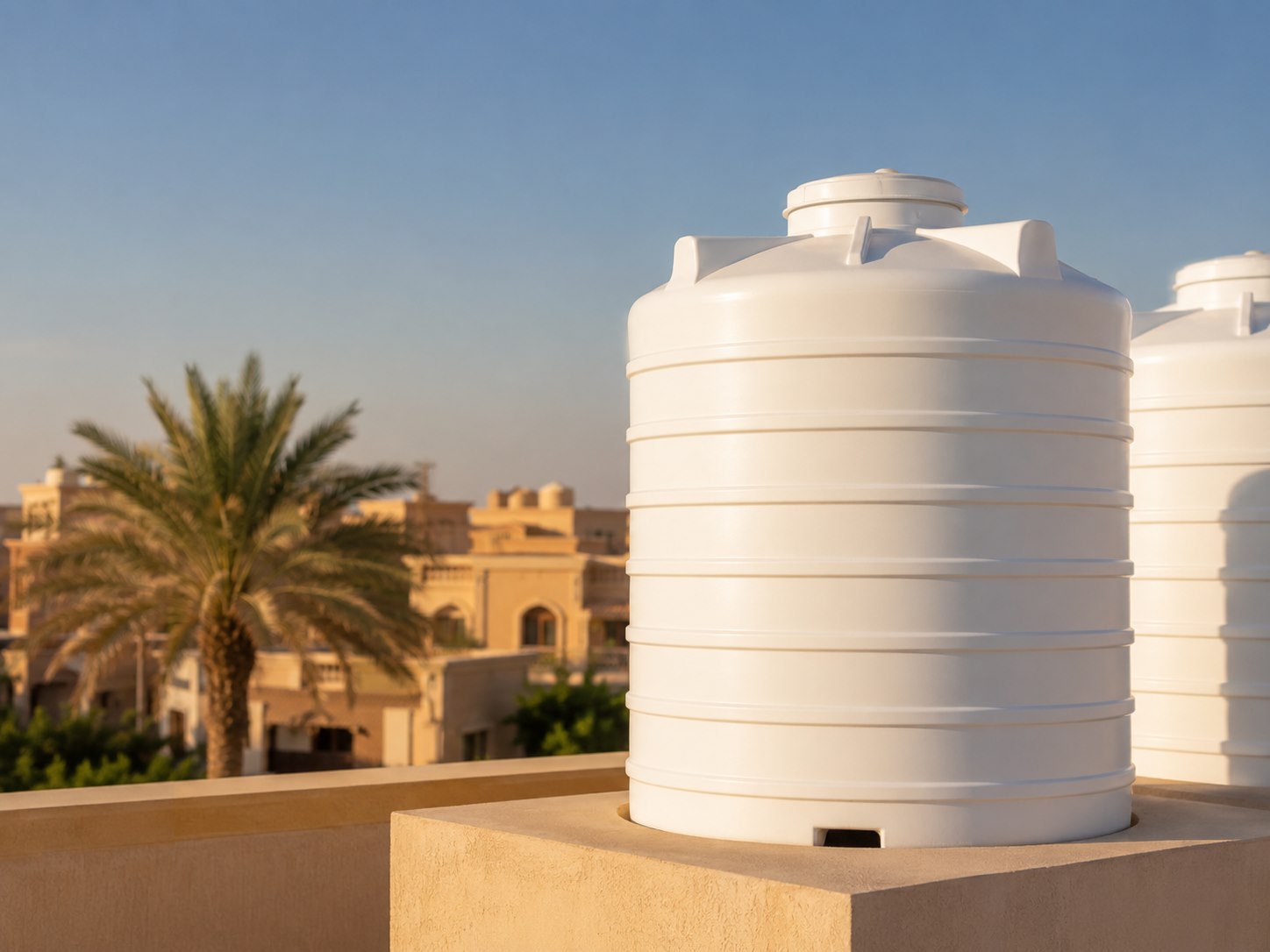
The Quick Answer: The Best Water Tank Type for Most Homes Is Opaque Multi-Layer Plastic
For most Eastern Province homes, a multi-layer, opaque polyethylene (plastic) tank is the practical pick: light, affordable, rust-free, and algae-resistant as long as it's opaque. But each type has its place, and more important than the type is one fact: no tank is "self-cleaning"; every type needs regular cleaning. Here's the honest comparison.
1. Plastic (Polyethylene) Tanks
The most common on our rooftops. How long one lasts depends mostly on its UV protection and how much direct sun it gets.
- Pros: lightest and cheapest, doesn't rust, easy to install, available in many sizes.
- Cons: strong sun can make a tank without UV stabilisers brittle over the years. According to the UN Environment Programme's Environmental Effects Assessment Panel, plastics made for long outdoor use are typically compounded with UV stabilisers to limit the damage from the sun's UV rays. Clear or light single-layer tanks let light in, so algae grow.
- Tip: choose a multi-layer, opaque, UV-stabilised tank: tougher, cooler, and far less algae than a light single-layer one. For drinking water, look for plastic made for that purpose. According to the World Health Organization, storage tank materials should be approved for use in contact with drinking water and should not leach contaminants or cause taste, odour or discolouration.
2. Fibreglass (GRP) Tanks
Among the longest-lived types when well made and maintained.
- Pros: doesn't rust, handles high heat well, and its smooth interior resists biofilm better than rough surfaces.
- Cons: costs more than plastic, and needs a UV-resistant outer layer or the Gulf sun degrades its surface. It is not automatically "algae-proof"; raw fibreglass lets light through, so it must be opaque and food-grade for drinking water.
3. Concrete Tanks
Usually ground-level, and long-lived when well built and kept free of cracks.
- Pros: very durable, opaque walls block light (limiting algae), and good for large underground storage.
- Cons: heaviest and most expensive to install; it can crack over time and the steel reinforcement inside can then rust; new tanks need flushing before use. And it's not "maintenance-free"; it needs crack inspection and sediment cleaning. According to the World Health Organization, cracks in a tank can result in contamination of the stored water and in water loss.
4. Metal Tanks (Galvanised / Stainless Steel)
Stainless steel generally outlasts galvanised (zinc-coated) steel, especially near the coast.
- Pros: stainless (especially grade 316) is excellent and salt-resistant, and lasts a long time.
- Cons: galvanised is a poor choice near the coast, where salt air wears down the zinc layer and the steel beneath can then rust. According to a peer-reviewed Jubail study in the Journal of Materials Engineering and Performance, the sea-splash zone on the Arabian Gulf coast is much more corrosive to galvanised steel than other parts of the world. Metal drinking-water tanks usually need a food-grade internal liner.
What Is the Best Water Tank Colour for the Heat? Opacity and Sealing Matter Most
The best tank for Eastern Province heat is fully opaque, light-coloured and tightly sealed. According to the World Health Organization, a tank cover helps keep sunlight from reaching the water, and light can promote the growth of algae. So opacity and a sealed lid limit algae growth, and a light colour reflects heat so the water stays cooler. The material's name matters less than those two factors.
Three Common Myths
- "An opaque tank never grows algae": not always; the wall must be truly opaque and the lid and openings must block light.
- "Fibreglass can't grow algae": false; raw fibreglass lets light through, and its surface can degrade over time and host micro-organisms.
- "A concrete tank never needs cleaning": false; every tank needs periodic inspection and cleaning.
Which Is Best for the Coastal Eastern Province?
Near the sea, salt, humidity, and heat settle the choice:
- Avoid galvanised and plain metal; they rust fast in salt air.
- Best: UV-resistant fibreglass, stainless 316, or an opaque UV-stabilised multi-layer plastic tank.
- For cooler water: a light, opaque exterior, with shading or insulation if possible.
The Rule That Applies to Every Type
Whatever your tank is made of, no material is "self-cleaning." The material affects how fast sediment and biofilm build up and how easy the tank is to clean, not whether it needs cleaning. A good smooth tank builds up more slowly and cleans more easily, but it still needs regular cleaning and disinfection like any other. We recommend cleaning home tanks at least twice a year in our climate.
Water Tank Cleaning in Your City
Whatever your tank (plastic, fibreglass, or concrete), the technician cleans and sanitises it with compounds safe for drinking water and hands you a written report, from 300:
- Water tank cleaning in Dammam
- Water tank cleaning in Al-Ahsa
- Water tank cleaning in Qatif
- Water tank cleaning in Khobar
- Water tank cleaning in Dhahran
Whatever your tank is made of, it needs regular cleaning; book a water tank cleaning with food-grade chlorine safe for drinking water and a written report after every service.
Sources
- Effects of UV radiation on natural and synthetic materials, UN Environment Programme Environmental Effects Assessment Panel, 2023.
- Guidelines for Drinking-water Quality, 4th edition incorporating the first, second and third addenda, chapter 6: Application of the Guidelines in specific circumstances, World Health Organization.
- Corrosion of Bare and Galvanized Mild Steel in Arabian Gulf Environment, Journal of Materials Engineering and Performance, 2010.