Blocked Drains at Home: Causes and Prevention
Grease, hair, food scraps and wet wipes cause most household blockages. How to prevent them, and the signs that it's time to book drain unblocking.
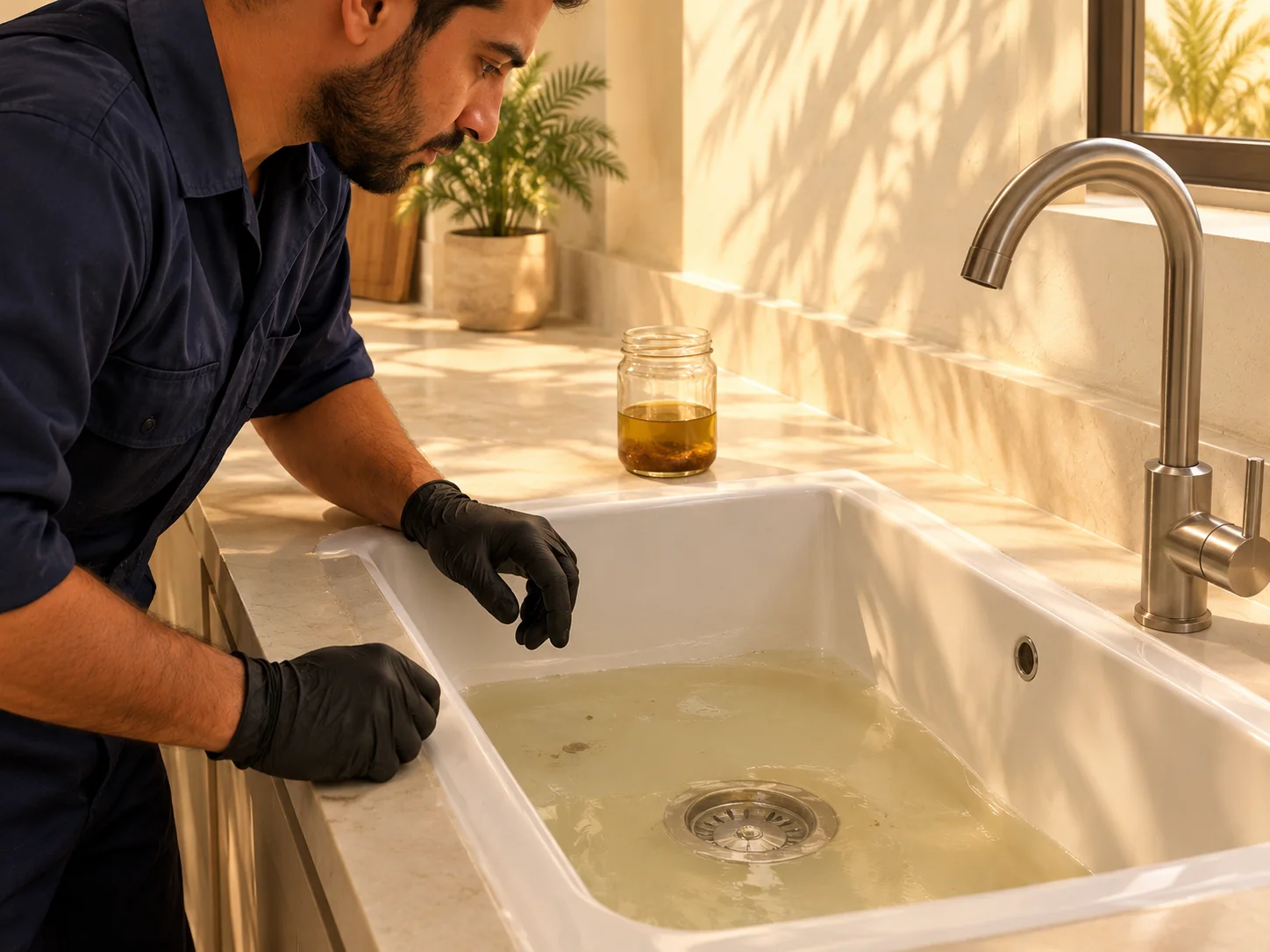
The Quick Answer: Most Blockages Start in the Kitchen
The biggest culprit in household drains is fat and cooking oil poured down the sink, followed by hair and soap residue in bathrooms and wet wipes flushed down the toilet. According to the US Environmental Protection Agency, grease from restaurants, homes and industry is the most common cause of reported sewer blockages, at 47%, because it solidifies inside pipes, narrows them and eventually stops the flow.
Why Blockages Get Worse in an Eastern Province Summer
Heat speeds up the breakdown of grease and food waste inside the pipes, turning a slow drain into a full blockage within days, with a smell that fills the house. And in districts off the sewer network, homes rely on septic tanks, so an internal blockage and a filling tank become one combined problem.
Causes by Location
- Kitchen sink: fat, frying oil, rice and food scraps, and coffee grounds.
- Bathrooms: hair combined with soap and shampoo residue, building up in the drains and under the basins.
- Toilet: wet wipes, sanitary products and anything other than toilet paper.
- Yard and roof drains: sand, dust and leaves, especially after dust storms and rain.
Simple Habits That Prevent Blockages
- Wipe grease off pans and plates with a paper towel before washing, and collect frying oil in a sealed container for the bin.
- Fit strainers on the kitchen and bathroom drains and empty them regularly.
- Flush nothing but toilet paper.
- Clear sand from yard and roof drains before the rainy season and after dust storms.
- In homes with a septic tank, keep an eye on the level and book emptying before it's full; the guide to septic tank emptying explains the signs.
When to Book Drain Unblocking
Book unblocking if several drains are slow at once, you hear gurgling from the drains, water backs up into the shower when the washing machine empties, or a smell remains after cleaning. Harsh chemical drain cleaners rarely clear a deep blockage and need careful handling.
How High-Pressure Unblocking Works
The technician assesses the blockage, then clears the pipe from the inside with high-pressure water until drainage runs normally, tests the flow in front of you and cleans the worksite before leaving. Prices are fixed: 249 for one point and 499 for the whole home (kitchen, bathrooms and yard), with septic tank emptying at 249 per trip and same-day slots where available. If the same point blocks again within 7 days of the service, Zabbitna arranges a free return visit to clear it.
Unblocking doesn't include pipe replacement, excavation or repairing structural breaks. If a pipe turns out to be broken rather than blocked, the technician documents it with photos and shows you the finding, and you choose freely who carries out the repair.
How do I know if it's a blockage or a full septic tank?
If the problem is at one point inside the house, it's usually a blockage; if the septic tank level itself is high, you need emptying. Not sure? Send a quick description on WhatsApp and you'll be pointed to the right service.
Drain Unblocking in Your City
- Drain unblocking in Dammam
- Drain unblocking in Khobar
- Drain unblocking in Al-Ahsa
- Drain unblocking across the Eastern Province
Slow or blocked drain? Book high-pressure drain unblocking at a fixed price you see before booking, with same-day slots where available.
Sources
- National Pretreatment Program: Controlling Fats, Oils, and Grease Discharges from Food Service Establishments, US Environmental Protection Agency, 2012.